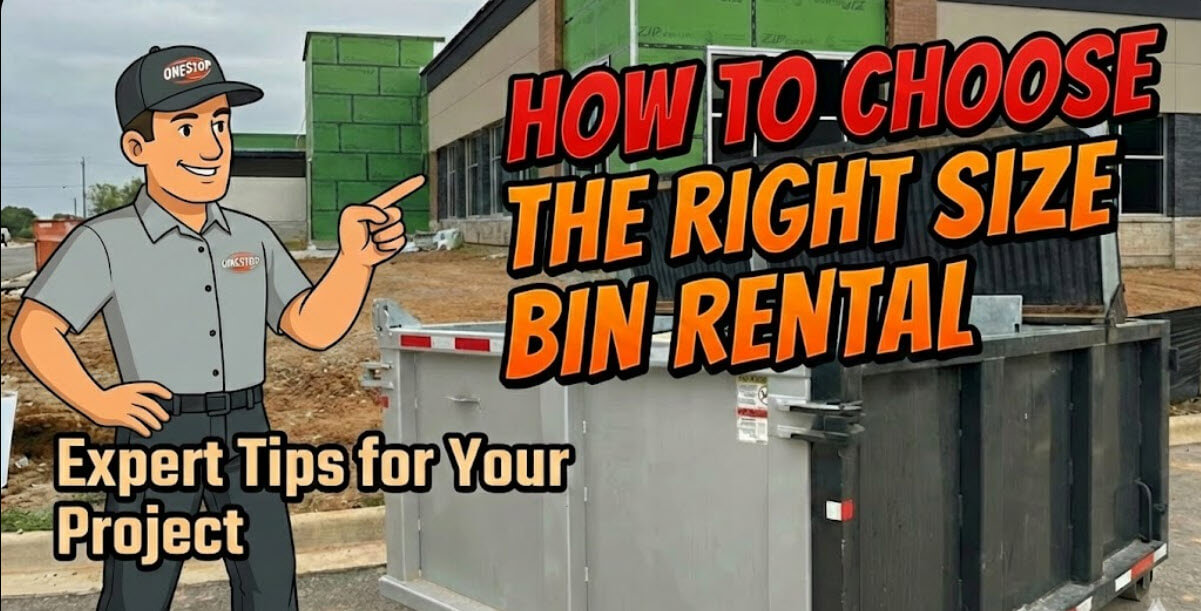
When you are staring down a major home renovation, a landscaping overhaul, or a long-overdue garage cleanout, the pile of waste can quickly become overwhelming. You know you need a dumpster, but the question that stumps most homeowners and contractors alike is: “What size bin rental do I need?”
Choosing the wrong size bin is the most common mistake in waste disposal.
Go too small, and you’re stuck ordering a second bin, doubling your delivery fees, and pausing your project. Go too big, and you’re paying for leftover space. At Onestop Disposal, we believe in making waste removal simple, transparent, and perfectly tailored to your needs.
This guide will walk you through everything you need to know to select the perfect bin size for your project, ensuring efficient disposal without exceeding your budget.
Why Bin Size Matters: The Economics of Waste
It’s tempting to just “guess and check,” but bin sizing is a science.
Waste is measured in cubic yards, a volume measurement that can be hard to visualize. To put it in perspective, one cubic yard is roughly the size of a standard kitchen stove.
Matching the bin size to the material is critical. Heavy materials such as concrete require smaller, sturdier bins to avoid exceeding weight limits, while bulky household junk needs high walls to contain the total volume.
Bin Sizing Factors to Consider Before Renting
Before you look at the specific sizes, assess your project using these three variables:
- Volume vs. Weight
This is the golden rule of bin rentals. Dense materials, such as dirt, concrete, and rock, weigh significantly more than bulky materials, like old furniture, drywall, and wood. You cannot fill a large 30-yard bin with concrete because the truck cannot lift it.
- Space Constraints
Where will the bin go? Our 5-yard bins are compact (10’ x 6’) and fit easily in a single parking spot or a tight driveway. Our massive 30-yard bins require significantly more clearance because they are 18’ in length.
- Type of Debris
Specialized projects often require purpose-fit bins. For example, roofing shingles pack down flat and are incredibly heavy, whereas green waste creates large air pockets.
Onestop Disposal Bin Sizes: A Detailed Breakdown
At Onestop Disposal, we offer a versatile range of sizes to suit every job, from minor yard work to commercial demolition. Here is the deep dive into our inventory:
Low-Wall 5 and 7 Cubic Yard Bins

These are your “dense material” workhorses. If you are tearing up a driveway, removing sod, or breaking down a brick wall, these are the bins for you. The low walls (2 feet high) make it easy to shovel heavy debris over the side without straining your back.
- Best for: Concrete, dirt, sod, rock, gravel, and brick.
Mid-Range Multi-Task 12 and 16 Cubic Yard Bins


These are our most popular sizes for standard home renovations. The 12-yard bin holds about 4 pickup truck loads, making it perfect for a kitchen tear-out or a medium-sized deck removal. The 16-yard bin offers higher walls (5 feet), which is excellent for bulky items like old sofas, mattresses, or large amounts of drywall.
- Best for: Household junk, renovation materials, roofing shingles, and green waste.
The Big Gun 20 and 30 Cubic Yard Bins

When you have a whole-house cleanout or a major construction site, you need capacity. We offer the 20-yard bin in various configurations, including a 16-foot length option for longer debris, such as lumber. The 30-yard bin is the largest in our fleet, capable of holding 10 pickup truck loads of material.
- Best for: Construction, demolition, estate cleanouts, and commercial waste and debris.
Common Mistakes to Avoid When Renting a Bin
1. Overfilling the Bin
Every bin has a “fill line,” usually level with the top rails. Stacking debris like a pyramid above the rim is a safety hazard. Our drivers cannot legally transport an overloaded bin because debris could fly off on the highway. If you overfill it, you will likely be asked to remove items before we can collect the bin.
2. Mixing Prohibited Items
While our bins handle most things, hazardous waste is a no-go. Do not throw in car batteries, paint, tires, or propane tanks. These items require special disposal methods to protect the environment. Mixing them into a general waste bin can result in significant fines.
3. Blocking Access
Ensure the drop-off location is clear of cars, low-hanging wires, or tree branches. Our trucks need space to maneuver the hooklift system. If the driver can’t access the spot, you might face a “dry run” fee.
Why Choose Onestop Disposal?

We aren’t just another faceless rental company. Onestop is your local waste management partner serving the Greater Vancouver and Fraser Valley areas. Here is why homeowners and contractors trust us:
- Transparent Pricing: Our rates are clear. We offer competitive pricing starting from $299 for a 2-day rental (subject to location), with no hidden surprises.
- Flexible Rental Periods: Whether you need a bin for a quick weekend cleanup or a week-long project, we can meet your bin rental timeline.
- Eco-Friendly Practices: We don’t just deliver the bin and drive away. We are committed to responsible disposal and recycling to minimize the landfill impact.
- Lid Options: Dealing with rain or worried about neighbors using your bin? We offer 16 and 20-yard bins with lids to keep your waste dry and secure.
Choosing the right bin doesn’t have to be a guessing game. By assessing your debris and volume, you can save money and keep your project running on schedule. When in doubt, size up. It’s always cheaper to have a little extra space than to order a second bin.
Still have questions about your bin rental sizing options? Contact our bin rental experts today at 604-613-5271 to learn more about picking the perfect size bin for your upcoming project!
Frequently Asked Questions About Sizing for Bin Rentals
What fits in a 5-yard bin?
This size is perfect for small residential projects, for example, a bathroom renovation, garden cleanup, or decluttering a garage. It typically holds about 2.5 pickup truck loads of waste.
Is a 10-yard bin big enough for a kitchen remodel?
Yes, usually. A 10-yard bin can hold roughly 5 pickup truck loads, which covers cabinetry, flooring, and drywall from an average-sized kitchen demolition.
What is the best size bin for a whole-house cleanout?
For a large cleanout involving furniture, appliances, and general household junk, a 20-yard bin is the standard recommendation. It accommodates bulky items that don’t compact well.
Can I put heavy materials such as concrete or soil in a large bin?
No, you typically need a smaller, specialized bin (often 5 to 7 yards) for heavy, dense materials like concrete, dirt, or brick. Large bins (20+ yards) have weight limits that these materials would quickly exceed, making the truck unable to lift them.
How high can I fill the bin?
You should never fill a bin past the top rail (“water level”). Overfilling creates safety hazards during transport, and drivers may refuse to pick up the bin or charge you a fee to level it off.
Does the length of the bin matter?
Yes, especially if you have long items like lumber, pipes, or gutters. A 12-yard bin might have the same volume as a tall 10-yard bin, but its longer footprint makes it easier to dispose of 8-foot or 10-foot boards without cutting them.
What happens if I order the wrong size?
If it’s too small, you’ll end up paying for a second haul (swap-out), which doubles your transport costs. It is almost always more cost-effective to go a size up when deciding between two sizes.
Are bin dimensions the same for all rental companies?
Not exactly. While the volume (e.g., 20 cubic yards) is standard, the physical dimensions (length multiplied by height) can vary depending on your rental bin provider. Always check the footprint if you have a tight driveway or specific space constraints.
Do 30-yard bins fit in a residential driveway?
They can, but they are very long (often 20–22 feet) and heavy. You need to ensure your driveway is long enough to accommodate the bin plus the truck that drops it off, and be aware that the weight could damage asphalt or pavers.